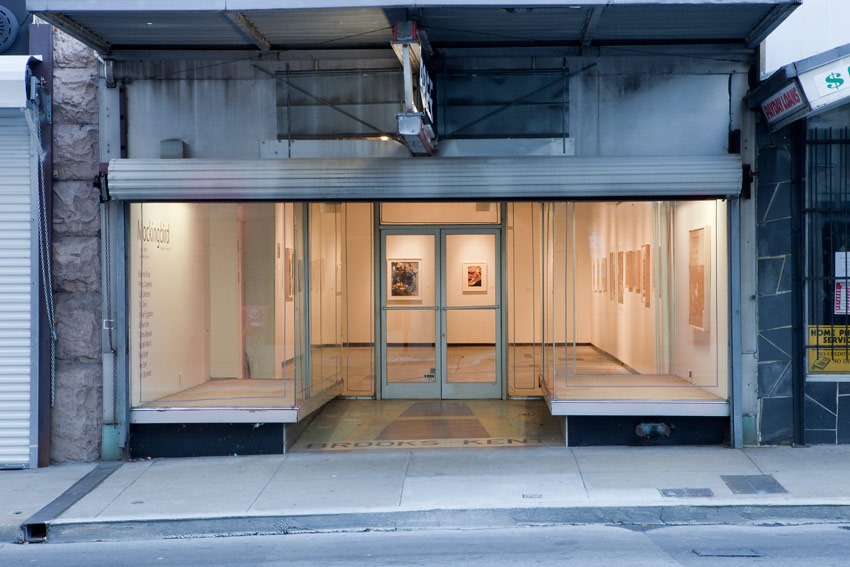
→ Installation Views See photos of the gallery and of the show.
→ HOME Return to the BRIEF Gallery homepage.


Mockingbird
A mockingbird is known for its ability to hear sounds and reproduce them with its own voice; an echo of something that was once there. That vestige becomes a new expression with a new purpose, a metaphor symbolizing the artist. The Mockingbird is the state bird of Tennessee.

This group show includes photographic work that in some way has been influenced by an experience with Tennessee. The experience could have been a direct one, or an indirect one...    an obvious relation to the state or something known only under the surface as a light breath.     Other themes emerge that push deeper into the narrative, past the initial Tennessee relation, as the artists' specific experiences are explored.

( Works listed in order of appearance )
- Place your mouse over the text below to show the corresponding thumbnail images.

Phillip Carpenter
Tennessee Cross. (Motel Door) Knoxville, TN 2006 – A door is a recognized object that immediately suggests a passageway into a familiar place, or the way to something that has not yet been experienced.   Everyone is transient.   The gallery is transient.   The gallery is Brief.  The first photograph that viewers come to is of this motel door. All of the photographs in the show have an underlying relation to the state.  Tennessee is geographically located within the bible belt of the United States. The architecture of the door creates a perfectly framed cross. A bright ethereal light emanates from the peephole from an unknown source beyond the solid white door. A room-rate tag hangs above a sign saying, “Welcome to Tennessee.”

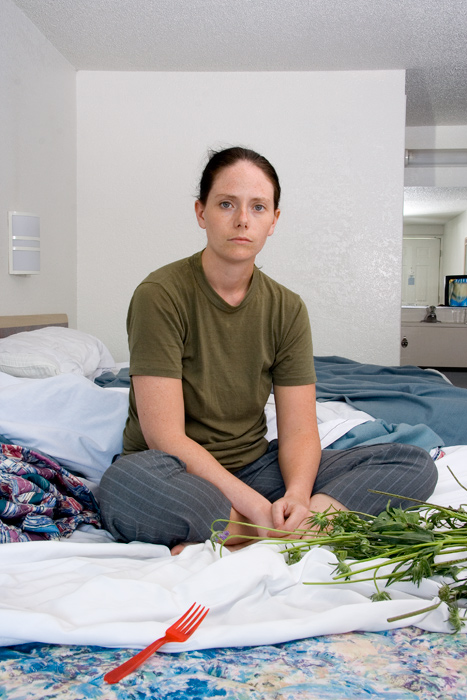
Michelle. Knoxville, TN 2006 – The photograph exists within this seemingly honest moment that has the potential to, all at once occur before, during, and after some experience or enlightenment that leaves one’s perception stripped away from any illusions and left only with the truth. The look on the young woman’s face is one of absolutely no pretense or deflection and has a directness which alludes to the present tense.    The used flower stems might be suggestive of the past, while the red fork suggests that something has been, or is about to be eaten, literally or metaphorically.


Shawne Brown
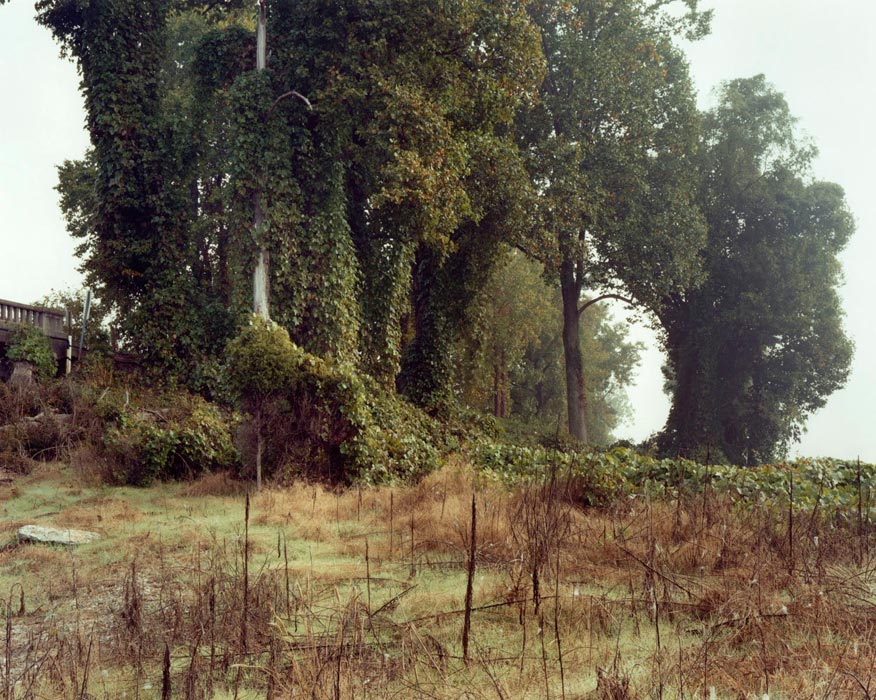
Untitled, East Tennessee (Landscape) – Shawne Brown is one of the artists who’s work in the show represents the long-lived experience of Tennessee.   Both of the photographs in the show were taken in East Tennessee near where he grew up.  A well known landscape can be restrictive to a photographer until you discover a fresh perspective somehow within this view that you already know so well.  Shawne’s photograph of the East Tennessee landscape is a composition of swirling balance and tidal wave-like movement suggested amid the relative stillness of the land and the trees.  It resides somewhere between the temporality of smoke and water even though it is neither.   The best landscapes are usually fleeting. One day those trees will be gone.   The kudzu will claim even more than it has already.   It won’t ever look the same but it is beautiful in the moment that it is.

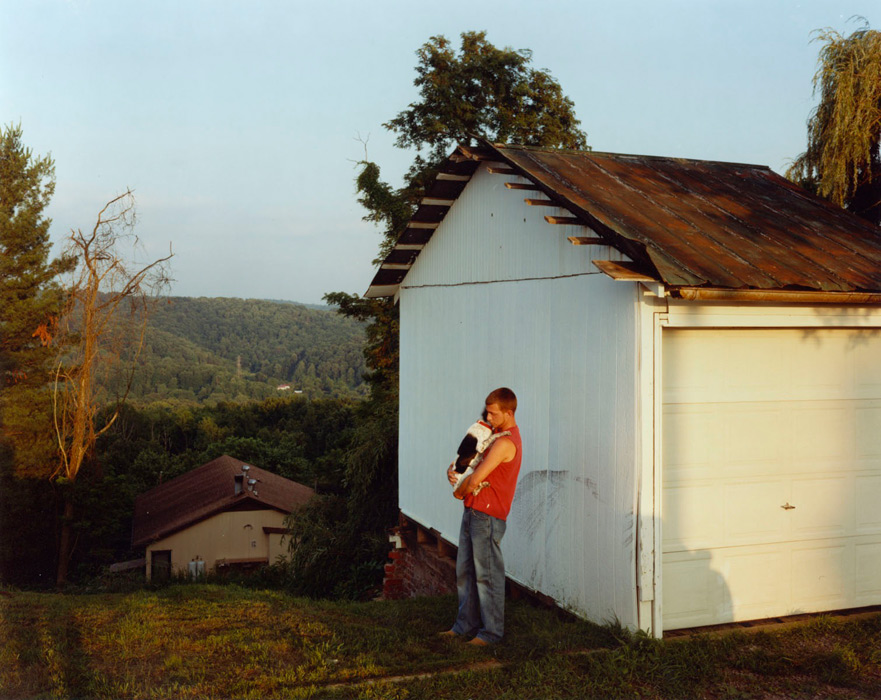
Jason and Buster. Kingsport, TN 2004 – Shawne’s photograph of Jason and Buster in Kingsport, TN is of personal subject matter because the person in the photograph is his brother.   It was taken at his brother’s home.   Both of Shawne’s photographs in the show are different visually, but compliment each other emotionally and stylistically by evoking a similar ephemerality and closeness of heart.  The photograph was taken at the house where his brother used to live.  Shawne said, “ My brother was in the process of getting rid of the dog and he was having a hard time with it because he really liked the dog.   His wife was about to have a baby and even though he loved the dog, they felt that it was too wild to have around a baby.  It was a crazy dog that would jump around all over the place and would run and jump up on people and also up into Jason’s arms.  They found a guy that had a farm and gave the dog away to him.”  The golden setting sunlight is the perfect metaphor for the story that the photograph tells.  The image looks like home, not a specific home, just home.


Baldwin Lee
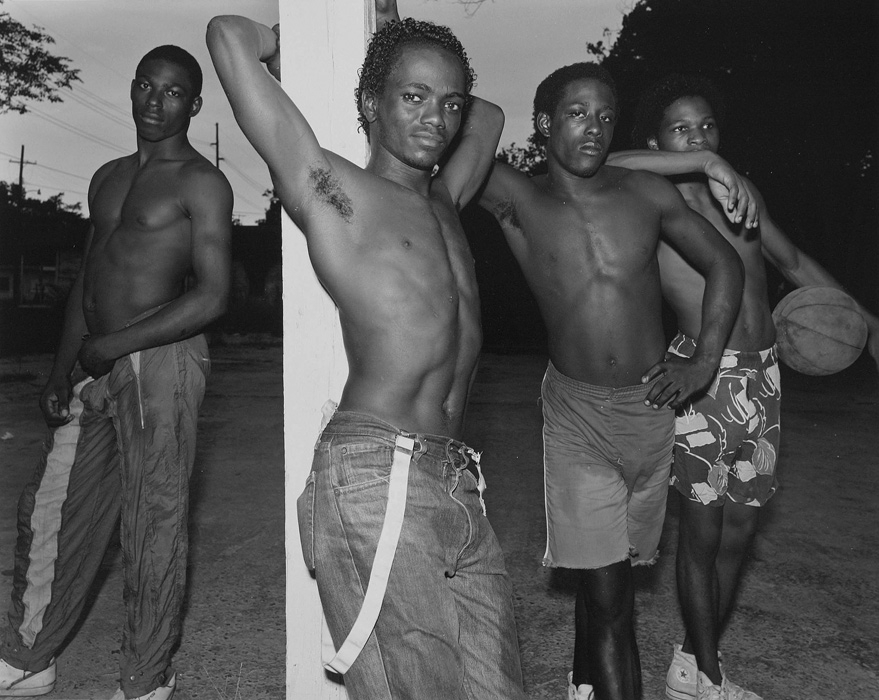
Untitled. (Basketball) 1985 – In the mid nineteen-eighties, Baldwin Lee began a photographic body of work that was initially funded by a John Simon Guggenheim Memorial Fellowship Grant and a National Endowment for the Arts Fellowship Grant.   His travels took him all through the south and the prominent subject from this body of work became “Black Americans in the South.”  The photography is stunning and powerful.  His use of the large format camera has the clarity of a dedicated and severely focused artist excited by the potential inspirations that exist within a wandering photographic exploration.  Baldwin is synonymous with Tennessee because of his indelible presence and delivered influence as a tenured professor at the University of Tennessee where, in 1982, he created the photography program.  When looking at the photograph of the basketball players, you cannot escape the directness of interaction between the subjects and the photographer.  It is something that is so masterfully done, that thoughts of the photographer’s close presence fade away and are immediately replaced by the experience of the viewer in the gallery standing before the photograph. There is a certain implied sexuality to the photograph that is probably better read as a strutting display of confidence within the timelessness and invincibility of young manhood. 


Mark Steinmetz
All four of Mark’s photographs in the show are from his body of work, entitled, “South Central” which was made while he was living in Knoxville, TN during the early 90’s (1991-1993).  The title was inspired by the name of the telephone company that serves Knoxville, “South Central Bell.”

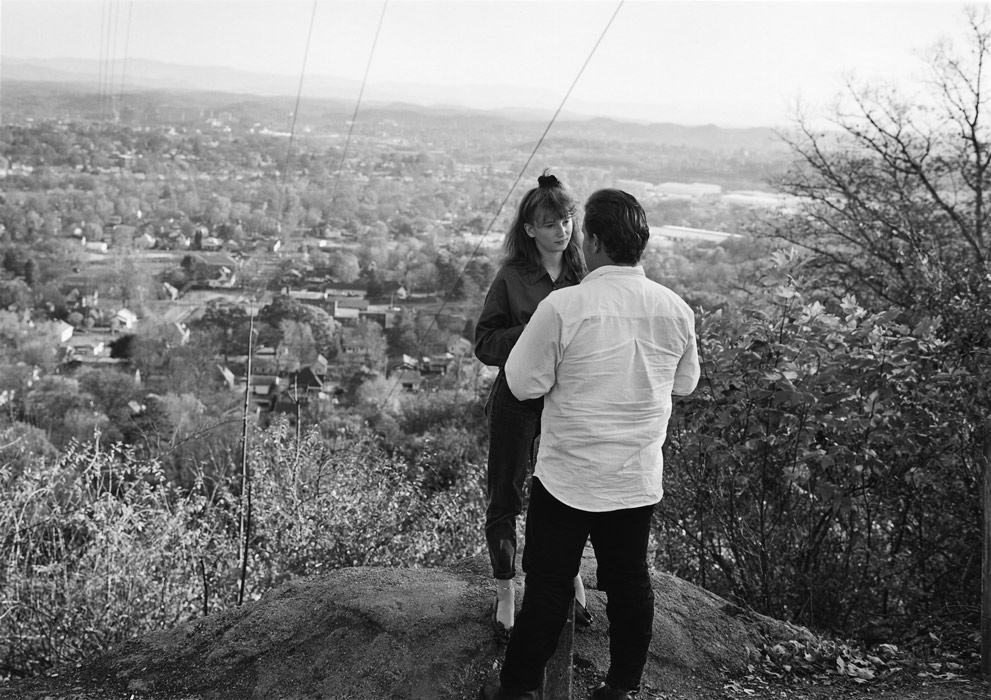
Knoxville, TN (Couple on the Ridge). 1992 – The ever-present flowing hills of East Tennessee give a literal gravity to the potential outcome of the couple’s conversation.  It looks like it was taken at some legendary overlook on a well-worn and much storied bluff.  …A repetitively traveled place of significance; A timeless place of many a weighted conversation between couples.

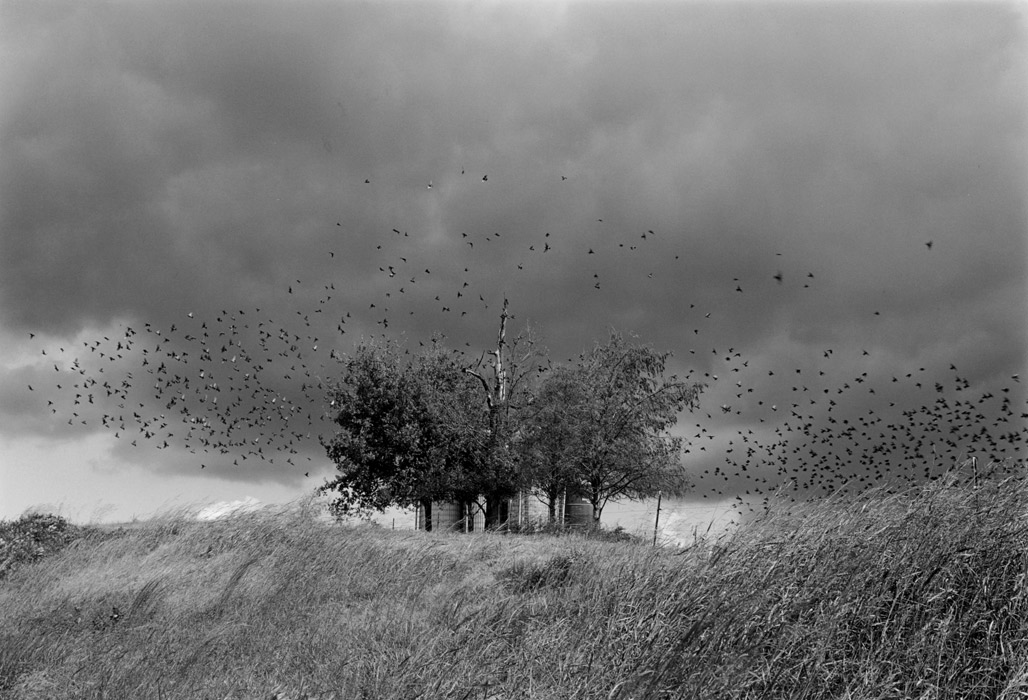
East of Knoxville (Birds). 1991 – Mark is able to reveal a moment that is often emotionally riveting, with or without people in the photograph.  The birds and the tree have become somewhat sentimental to the show and its bird-related title.   In addition to the inherent emotion in the photograph that is partially delivered by the dark ominous clouds and the wind-swept grass, the precision and timing involved is astounding.  When you notice exactly how many birds are flying and exploding outward from the tree, it seems that much more amazing and unlikely of a composition.   Everything is moving quickly and will soon be gone forever, never to be the same, not even after one second more.   The presence of what appears to be an old house exactly behind the tree, gives the viewer another detail to contemplate.

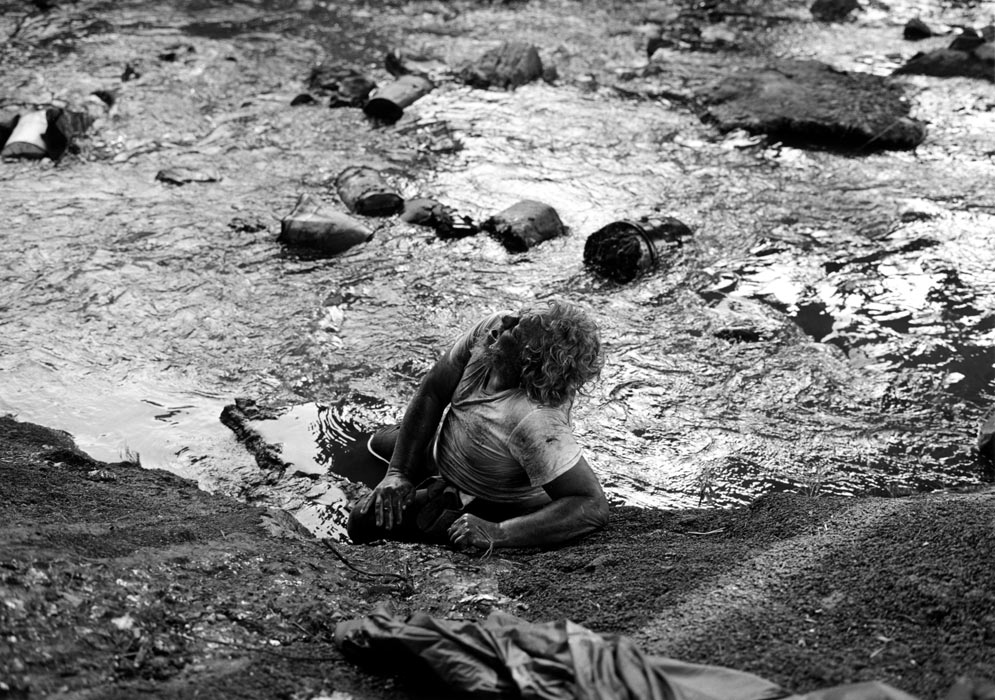
Knoxville, TN (Man in the Creek). 1992 – Mark has proven in photograph after photograph that he has the instinctive ability to stop time at the meaningful moment while also standing at the emphatic angle.  His timing and compositions are irrefutable. It’s hard to not be struck by the raw emotion and drama in his photographs.  Mark’s compositions reveal his possible involvement and proximity to the people in the photographs but his presence appears unaffecting to the people and the surroundings, as if he were invisible to them and waiting on that one perfect moment to click the shutter.   The man in the creek bed is either in agony, crazed elation, or perhaps neither.  

Knoxville, TN (Girl at the Picket Fence). 1991 – The girl at the fence’s expression is emotive and ambiguous in ways that could be viewed as different feelings from different people, much the same as her equivocal age.  She has the potential to be heading towards numerous emotional possibilities.  Her all-encompassing expression is suggestive of many emotions and that is what is so beautiful and intriguing about the photograph.  Beyond the stilled emotional movement, the viewer gets a sense of the relationship that Mark has with the people in the photographs. There is an impression of trust, respect, and reverence existing in the space between the lens and the people in his photographs. 


Alec Soth
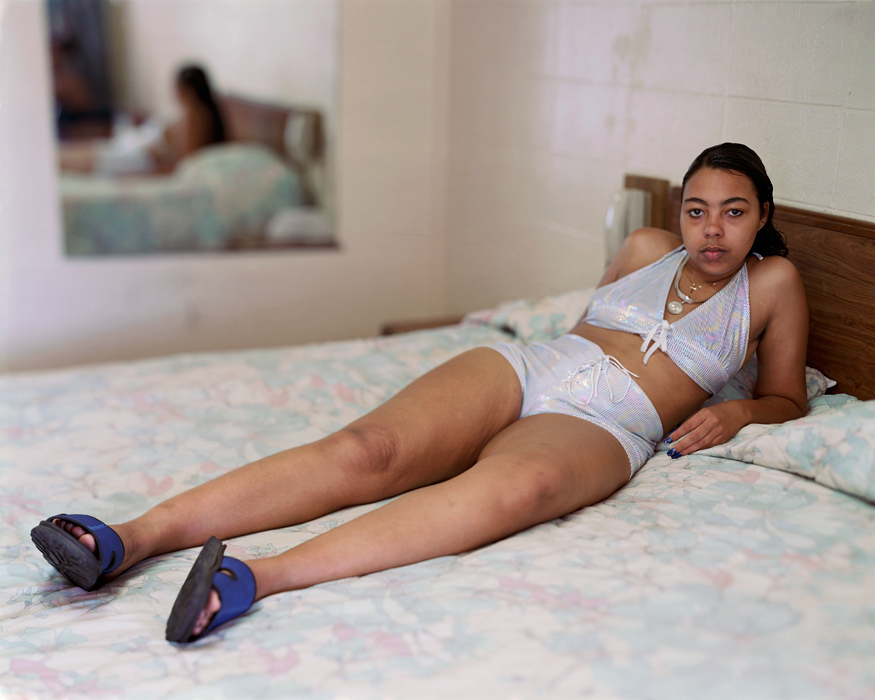
Sunshine. Memphis, TN  – On the wall behind her, the mirror reflects a very out of focus image of the girl, Sunshine laying on the bed, that you can’t make out in detail.   How does she see herself?   What are we seeing?  Her eyes are definitely not evasive and because of the clarity of the photograph, it is possible to look deeply into them. They look as unforgiving and authentic as the setting that she appears in.  Photographs rendered from an 8”x10” large format camera have the potential to let you see, with extreme clarity, what was before the lens.    Something that illustrates this, and also makes you wonder about the deeper meaning, is Sunshine’s painted false fingernails.  The middle nail on her left hand says “Big J” on it.  Even though it is very small, it’s something that is another suggestive road to contemplate and provides even more depth and emotional gravity to the photograph.  You would never be able to see this in a web-version of the photograph, only in the original print.  The photograph was taken in Memphis during Alec’s seminal road trip project, “Sleeping By The Mississippi” that lead him from the head-waters of the Mississippi River, beginning in his home state of Minnesota, to then follow the river all the way down to the point where it spills out into the Gulf of Mexico on the southern coast of Louisiana.  
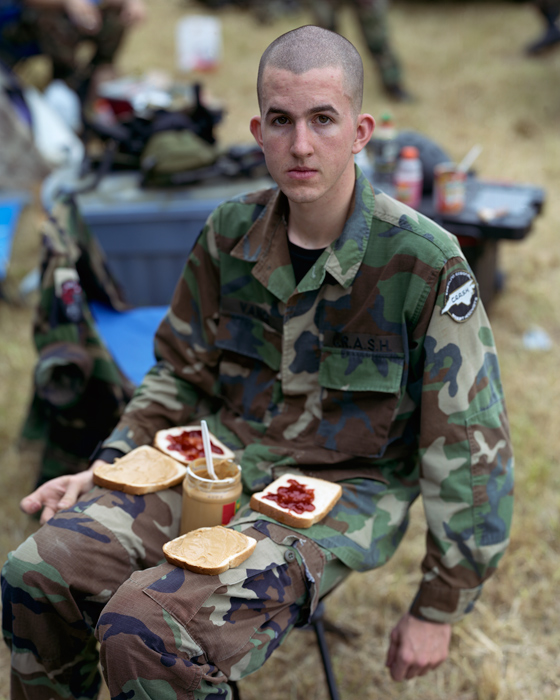
Josh. Joelton, TN – The soldier is a young man with a boyish presence that is at first disguised by the uniform that he wears.  His right hand is awkwardly fixed and his eyes are still gentle and seemingly innocent.   The peanut butter and jelly sandwiches could also symbolize his soon-to-be-compromised innocence that is possibly still lingering.   What does the uniform arm-patch, that reads “CRASH” imply?
Some of the things that happen in the frame when taking photographs are not seen until long after the moment that the photo was taken. Alec’s photographs often seem like everything is meant to be exactly where it’s supposed to be both physically and psychologically to suggest a specific metaphor and deliver the feeling and power of the portrait. This image is from Alec’s body of work entitled, “The Last Days of W.”


William Eggleston
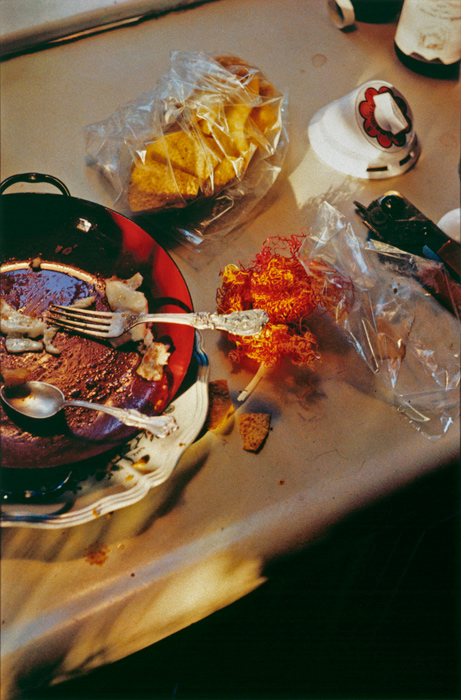
Untitled. (Memphis, TN) 1989 – The photographs of William Eggleston have been an undeniable influence on the medium. Without speaking for everyone in the show, it can be said that many photographers have eaten from his plate at some point or another. There are many that have at least dabbled from his entrée.  Those that were influenced have either taken this guide and melded it into their own visual languages, or have chosen to move away from anything related to his style.   Regardless of the outcome, his presence within the medium is undeniable. The used plates and the mostly eaten food on the counter possibly suggest an idea of his presence whether it was actually Eggleston’s leftover meal or not. Even though he has had worldwide fame and far reaching travels, Eggleston himself is a reference to Tennessee and more specifically, Memphis.  It is, and has been, his home many years.

He is credited as being the person that brought color to a place of acceptance within the fine art photographic culture.  His solo show at the MoMA in the mid 1960’s is now considered the hinge that originally began to swing open the door to validate color photography within the idea of fine art rather than the previously exclusive black & white qualification, which until then, classified a photograph as “true fine art.”   History and his wide-reaching influence have given him the moniker, “The Father of Color Photography.” 

Mike Smith
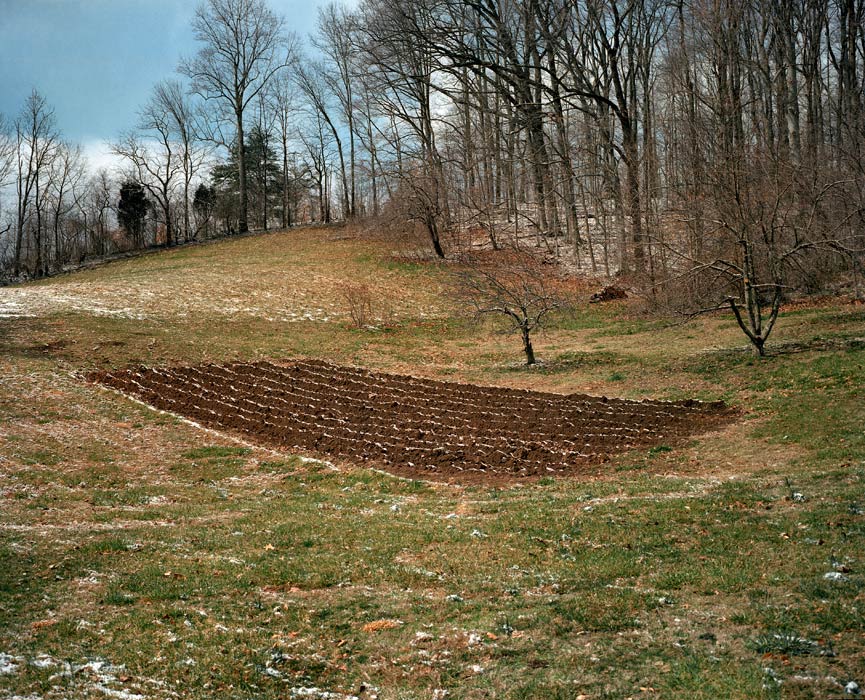
Gray, TN (The Winter Garden) 1996 – The tilled earth creates a mark on the land suggestive of a meaningful brush stroke or some similarly intentful man-made imprint.  A thin dusting of snow sits atop the contours of the dirt and appears sparsely throughout the grassy hillside that surrounds the aspired garden.  The photograph emphasizes the sculptural alteration of the land that Mike sometimes makes the subject of his photographs. This photograph is from his body of work entitled, “You’re Not from Around Here.”  Mike is literally not from around here but has been living in Tennessee since 1981 and profusely photographing the Eastern part of the state, more specifically Southern Appalachia.   He is a professor of art at East Tennessee State University.

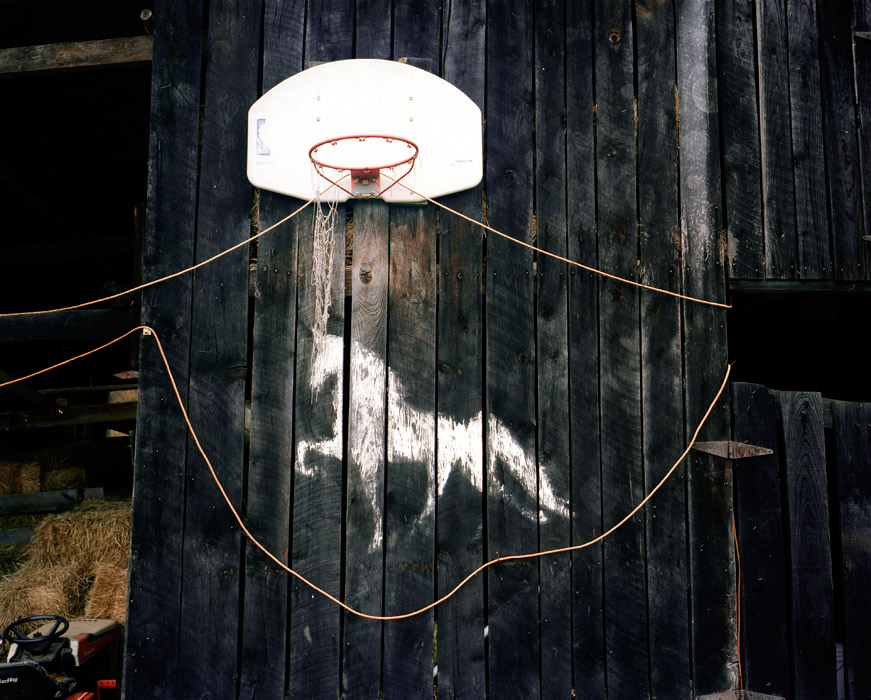
Gate City, TN (Basketball Goal & Horse) 2002 – Mike Smith’s photographs in the show place interest upon the people’s manipulation of the land, the structures, and the related markings, which create a specific regional aesthetic. All marks made by man, regardless of their intent or randomness, deliver a direct comment on the culture and environs that they exists in. The photograph was taken during Mike’s leave from teaching upon receiving a Guggenheim Fellowship in 2001.

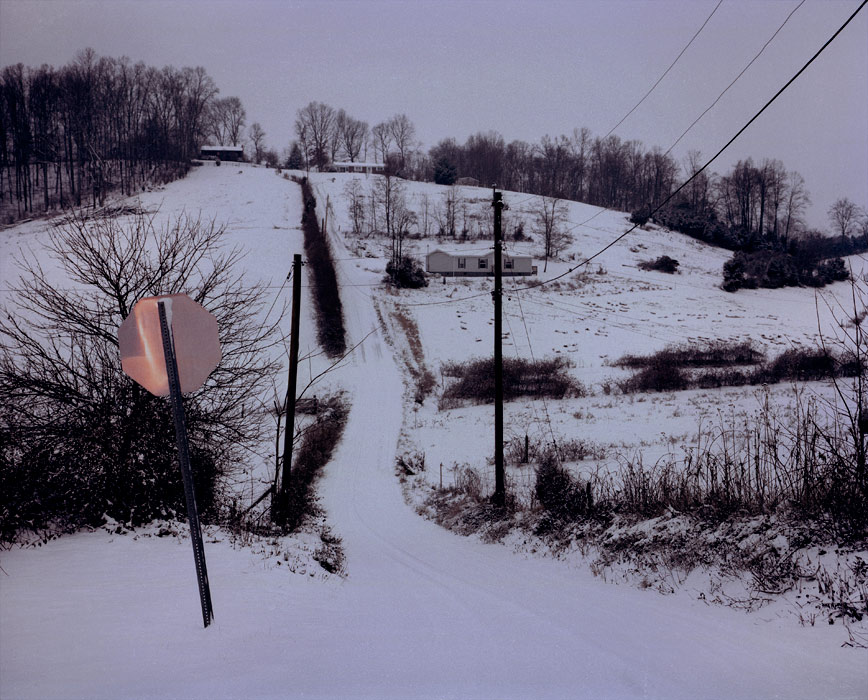
Piney Flats, TN (Snow & Stop Sign) 2000 – The trees on the top of the hill appear to match the movement of the ones in the foreground, but really they are quite different in their shape and distribution.  The accomplished awareness of what potentially exists in front of the photographer allows the trees to create two flowing parallel lines that dip down, mimicking each other in the composition of the photograph.  The modest homes have a perceived remoteness that is further emphasized by the near monotone contrast provided by the snow.   These things, in addition to the presence of the ambiently lit stop sign, give a subtle description and obscure insight into the lives of the people that live on this hill in Piney Flats, Tennessee.


Wardell Milan II
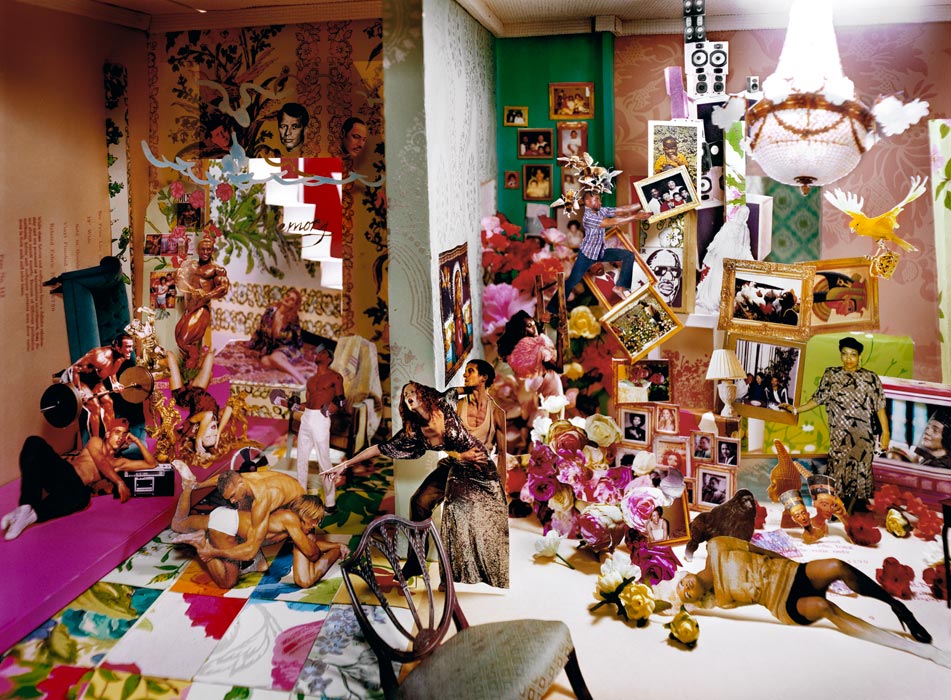
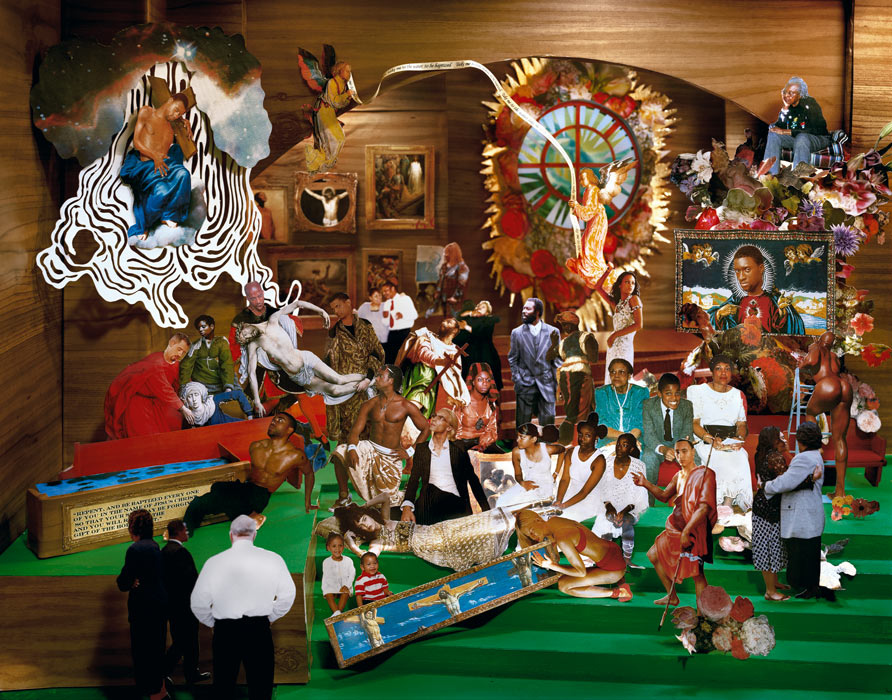
My Mother's flowers grow tall. They grow as tall as she wants.
Mount Calvary, Go tell it on the mountain.
Wardell currently lives and works in New York City but was born and grew up in Knoxville, Tennessee. His two pieces in this show, both comment on his experience of growing up in that region of Tennessee and area of the country.
Wardell’s work is both autobiographical and metaphorical in comment towards different aspects of his surroundings at the time. The photographs are the most non-traditional looking of any others in the show. The process to create the works involved making table-top dioramas, which exist three dimensionally. He then photographs the scene with one final photograph.


Tammy Mercure
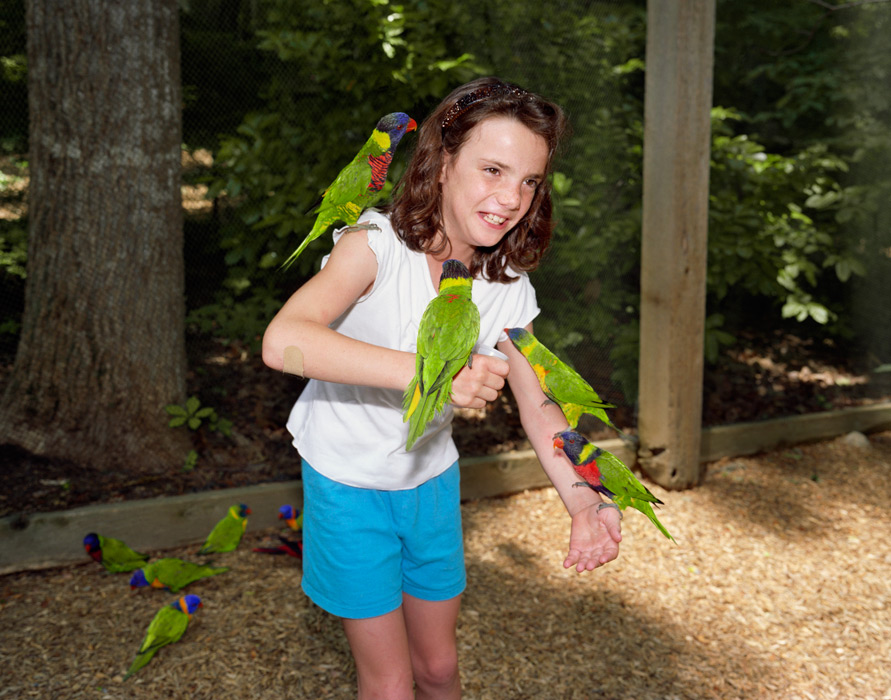
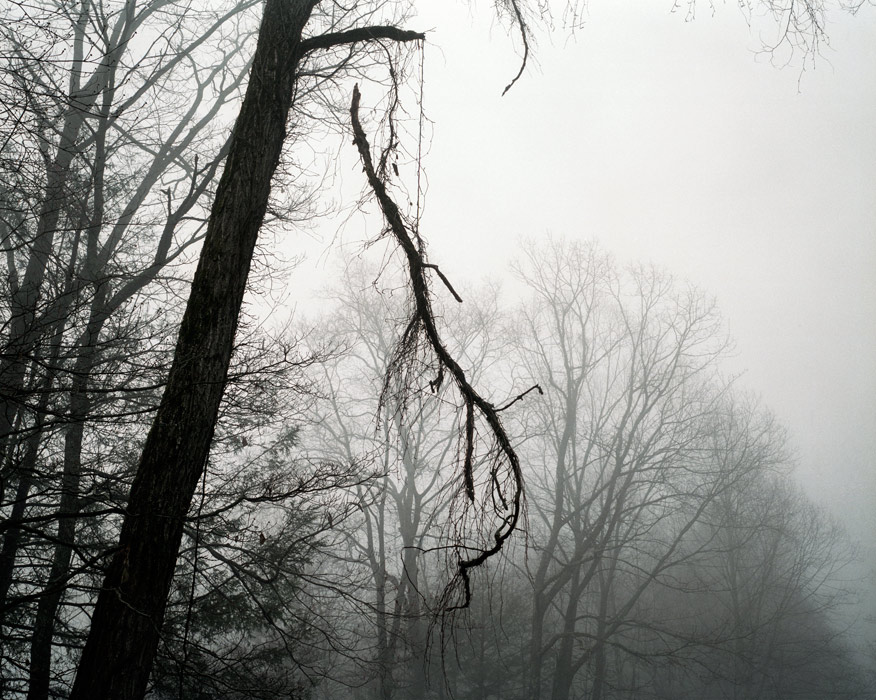
Tammy Mercure, originally from Iowa, is a one-time Tennessee transplant now living only a few miles across the state line in nearby Virginia. Her photographs in the show are from her body of work entitled, “Big Rock Candy Mountain” which traverses the highly developed kitsch personality present at the heart of Smokey Mountain tourist culture.    

Untitled. (Girl with Birds), from "Big Rock Candy Mountain." – The girl with the birds is in a state of panic, joy, fear, and excitement all wrapped up within one youthful instance before Tammy’s camera.   It is easy to be moved when seeing the image for the first time by a warm surge of empathic bliss.  There’s an uncomfortability and awkwardness to her excitement within this moment of youthful exhilaration.   Is the reality and power of youth better summed up with anything other than this reaction?  The photograph lyricizes youth and all its passionate sincerity.  The scene has the exuberance to incite anticipation of life’s unexpected first encounters and unforeseen adventures.

Untitled. (Dangling Tree Branch), from "Big Rock Candy Mountain." – The tree branch hangs in the balance much the same as the exhilaration of the girl with the birds.   It is beautiful within the bleakness that is suggested by the thread of a vine from which it hangs.  The atmospheric East Tennessee fog softens the background landscape defining the scrawled expressive lines that the branch makes in space, dangling within its suspended fragility.


Cip Contreras
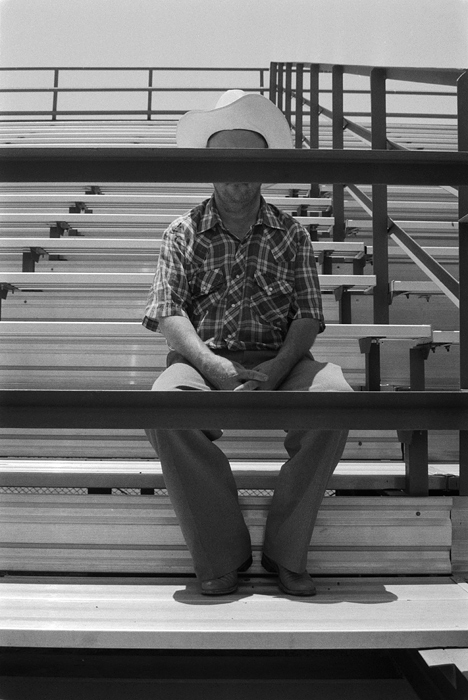
Untitled. (Anonymous Cowboy) – Cip’s photograph makes one think about what an outsider’s idea of Tennessee might be to them, before experiencing it.  The photo was actually taken outside of Tennessee.  It works in the show because it assumes what might be a preconceived assumption of Tennessee; Tight dark blue jeans, western shirts, and cowboy hats.  While that does exist, it is less common than is sometimes first imagined by people.  Cip Contreras lives in Nashville, TN.


Phillip Carpenter
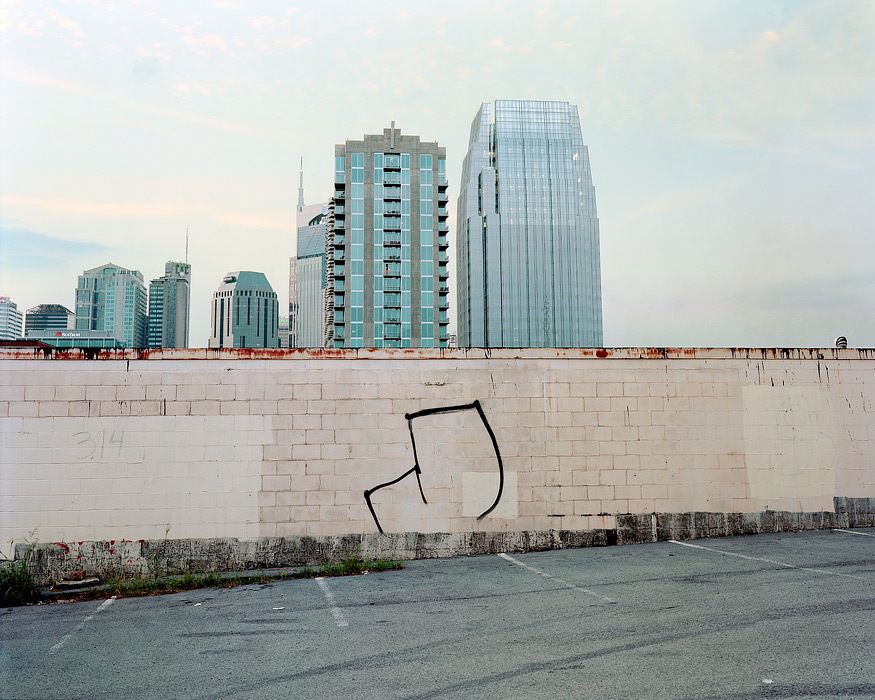
Untitled. (Nashville J) 2009 – This is the only cityscape in Mockingbird and was taken on the south side of downtown Nashville.  People are constantly moving to the city for different reasons, some musically motivated and others for varied reasons, all with an array of expectations.  There is a unique insinuate language mixed from local and other places’ influences that meld together to form an idea of the city.   The activity of people within their own ideas of what Nashville is, creates the aesthetic movement and character of the city.


Tim Davis
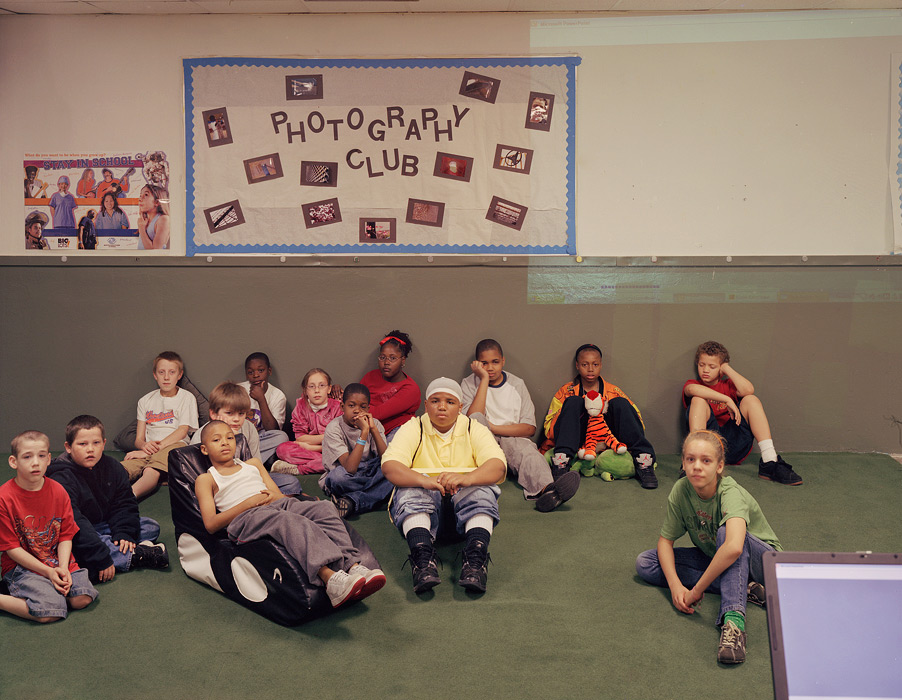
Photography Club, from “My Audience.” Knoxville, TN 2006 – This large 42” x 55” photograph hangs in the front window of the BRIEF Gallery.  It was taken in 2006 around the time of Tim’s solo show at the Knoxville Museum of Art as part of a community outreach program that takes place at the museum. People in Nashville walk down the sidewalk on their way to their destination of the day.  They see the Photography Club photograph on the wall and it suggests that something photographic in nature might be happening at the BRIEF Gallery, but that’s not why they stop. The photograph somehow resonates with the commonality of many people.  They stop and look at the children in the photograph to try and figure out why it’s there and what the kids are doing.  What does it mean by hanging in the window facing out at the world?  Many that stop to study it, have never considered walking into an art gallery on the street in the city. Some aren’t even sure what they are supposed to do, if they should enter or not. They look over into the large glass windows of the BRIEF gallery and are drawn in to the unexpected art gallery that suddenly appeared at 238 5th Ave North in Nashville, Tennessee for the last months of 2009.


→ Click here for installation views from the BRIEF gallery ←